
How am I showing up in the world? How am I interacting with the world?
Jasmin McGee | JUN 30, 2023
yoga sutras 1.33
brahmavihara
metta
karuna
mudita
upekkha
practice my practice
yoga on and off the mat
How am I showing up in the world? How am I interacting with the world?
Jasmin McGee | JUN 30, 2023
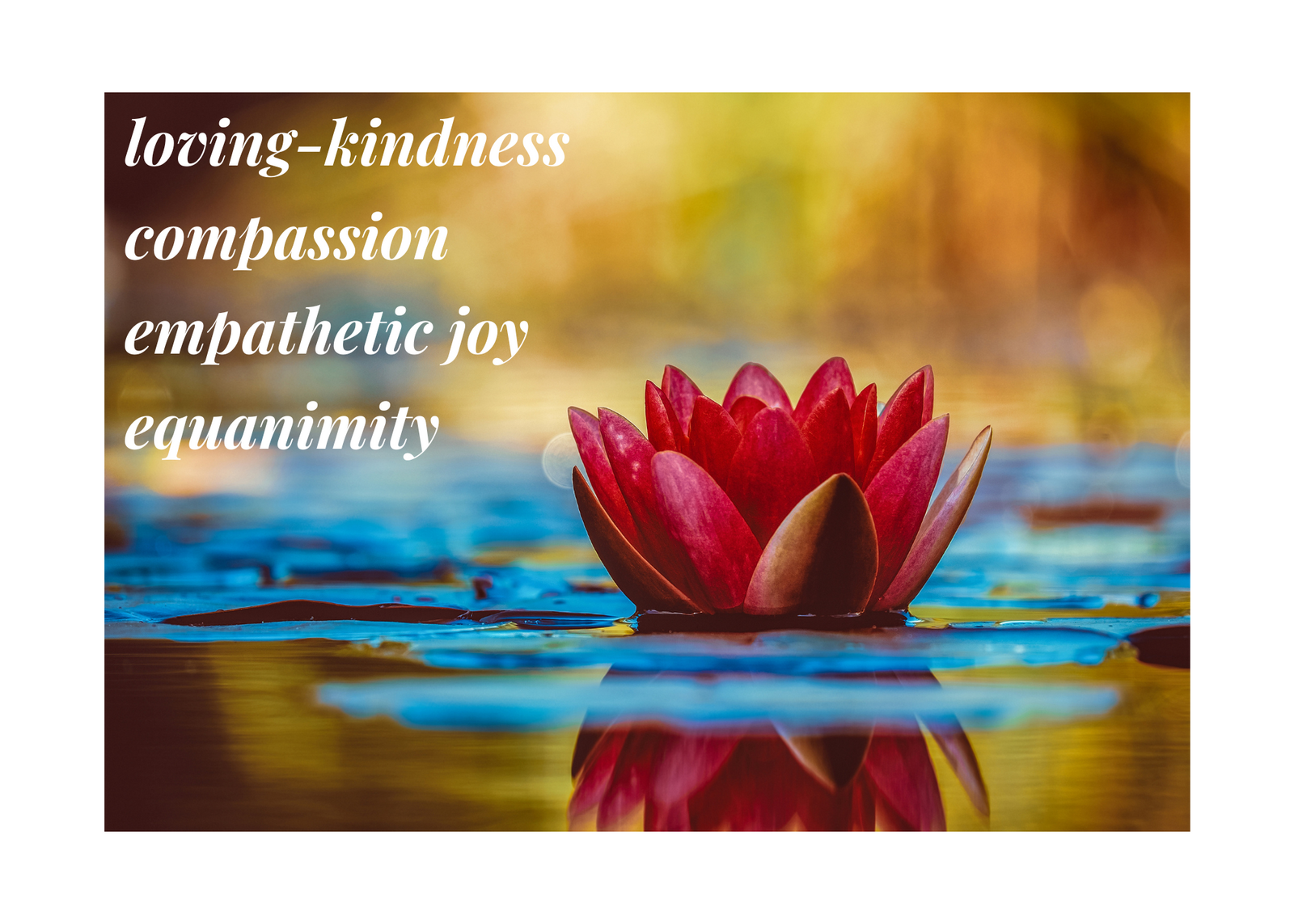
As I begin this new chapter of my life as a Yoga teacher – as I look at how I live my Yoga on and off the mat – I take self-inventory on how I present myself authentically in the world.
Authenticity is of utmost importance to me. Living my truth is everything to me. There are no guarantees in this life and our time here is very precious.
So, I ask myself: How am I living my life? Am I abiding by my truth? Am I living my Yoga on and off the mat as I walk side-by-side with others in this world?
And with all honesty… I can say that I’m doing my best. I also know that I am human. Therefore, I show myself grace and give myself room to grow and evolve from life’s lessons.
This brings to my mind Patanjali’s Yoga Sutra 1.33(*): “By cultivating attitudes of friendliness towards the happy, compassion for the unhappy, delight in the virtuous and disregard toward the wicked, the mind-stuff retains its undisturbed calmness.”
I wonder often: How am I showing up in the world?
I invite you to become curious as to how you are showing up in the world.
In Yoga Sutra 1.33 – the philosophical concept of the Brahmaviharas is taught. Brahmavihara is translated from Sanskrit to mean “divine abodes” or the “four divine emotions”.
These divine abodes or emotions are a pathway to how I can interact with others in the world. It is also a pathway on how I can interact with myself. It’s an attitude or a state of mind when coming into union with others and with myself.
There are 4 Brahmaviharas:
Metta speaks to loving-kindness. It speaks to showing good will towards all – including towards oneself.
Karuna is compassion that is created in response to recognizing suffering in others or within oneself. When suffering is witnessed or felt, loving-kindness is shown toward others or oneself. Karuna results from Metta. Compassion is the result of showing loving-kindness.
Mudita is being unconditionally happy – feeling empathetic joy – towards another’s happiness. It’s being genuinely happy for others when they succeed or are living their best lives.
The Buddha claimed that Mudita may be the hardest to develop because judgment, envy, greed, and comparing oneself to another is a common trait found within society. Mudita can be a difficult concept to witness in this modern, competitive society we are currently living in.
Upekkha is equanimity. It is coming into any situation – good or challenging – with mindfulness, balance, with a calmness in mind, and an evenness in temper. It’s allowing oneself to go into a situation without bias, judgment, fear, or projection of one’s own views.
Cultivating this evenness in mind is said to lead to wisdom over time.
So, as I continue to travel my path as a human being… as I continue my journey in this life, I will do my best to uphold the four virtues of the Brahmaviharas.
As your Yoga teacher, it is important that as I hold space for you, I teach from a place of loving-kindness, compassion, unconditional joy for you, and a calmness in mind. As a teacher, it is imperative to me that I live my Yoga authentically on and off the mat.
So, I encourage you to arrive just as you are – with the entirety of your feelings and experiences – and know that I can hold space for it all within the container that is set in each class. And the beauty is that each new day offers a chance to arrive in a different way. The choice is ours individually to make.
Shanti. Shanti. Shanti. Peace. Peace. Peace. Peace be with you today and always.
~Jasmin
(*): The Yoga Sutras are a respected collection of verses on Yoga philosophy written around 400 C.E. by an archaic sage of India known as Patanjali. The Sutras speak to the practice of Yoga far beyond the physical practice or asana. It is a guide to how inner peace can be achieved by overcoming the challenges of being a human being.
Jasmin McGee | JUN 30, 2023
Share this blog post
 OfferingTree